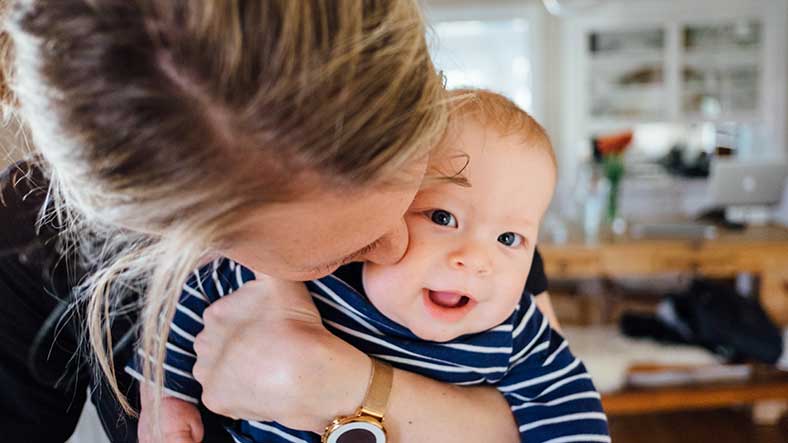
After having our two children, we discovered very quickly that visiting London with a baby is a completely different experience from exploring the city as a couple. Suddenly, lifts, buggy access, feeding stops, changing facilities and the quickest route between stations become much more important.
This guide is based on our own experience of getting around London with babies and pushchairs. London is very manageable with a baby once you know which routes are easier, where the step-free stations are and when a bus is a better option than the Underground.
Flying with a baby
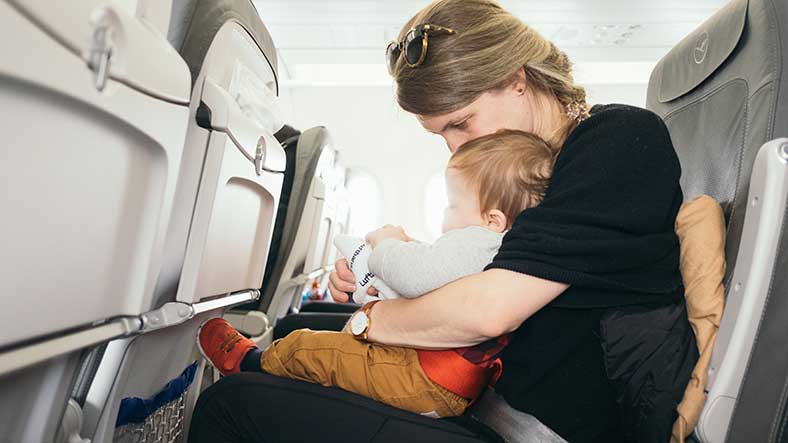
If this is your first flight with a baby, there are a few things we would recommend from our own experience. For starters, I recommend that you take a folding pushchair, and although it doesn’t have to be an umbrella pushchair, in my opinion, if it can be an umbrella pushchair, then all the better. We bought an inexpensive folding pushchair for trips since we didn’t want to spend a lot of money on a seat that we knew we would check in since you never quite know what condition it will be in when it comes out of the aircraft hold…
For us, the most important thing is that the pushchair is comfortable, folds easily and reclines for naps. I have to say that the pushchair we use to travel is not the one in the picture, that is the pushchair that we use at home and to go to central London.
At the airport it is possible to take the pushchair to the plane itself and there just before entering you can fold it and they will put it in the hold. When you arrive at your destination, sometimes they take the pushchairs out of the hold and leave them next to the plane or in a certain area if you have left the plane directly to a air bridge.
It is best to ask, as sometimes they take them to this specific area so that you can put the child in the pushchair before going through control, but sometimes you have to pick up the pushchair in the baggage reclaim area. If this is the case, you will find that in most airports they put the pushchairs through the normal baggage reclaim carousel, but at Stansted airport for example there is a specific area for baby equipment, including pushchairs, next to the toilets, so check the signs carefully just in case.
Baby luggage
Most airlines allow two pieces of free luggage for infants, such as a folding pushchair and a car seat. But I recommend checking with your airline before you travel.
Liquids on the plane
Liquid-screening rules now differ between UK airports, so check your departure airport shortly before travelling rather than assuming the same 100 ml process everywhere.
When travelling with a baby, UK rules allow enough baby food, baby milk and sterilised water for the journey, although the airport may open containers for screening. Breast milk can be carried in hand luggage in containers up to 2,000 ml even if the baby is not travelling; formula, cow’s milk, sterilised water and baby food require the baby to be present. Check the airport’s instructions before you travel.
The flight itself
If your baby is under 2 years old, they will not normally have their own seat. If you want them to have their seat, you will simply have to buy another seat, but it is common for them to travel on an adult’s lap. You will be given a belt for the baby that attaches to the adult’s belt.
To avoid ear pain on takeoff or landing, they recommend that you breastfeed or use a dummy during takeoff or landing. Feeding during take-off can also help to settle a baby, and sometimes they fall asleep afterwards.
Airports
From Heathrow you can reach central London by the Piccadilly line, the Elizabeth line or Heathrow Express. The Elizabeth line serves Terminals 2 & 3, 4 and 5 and can reduce the number of changes for many central destinations. Gatwick, Stansted, Luton and London City Airport each have different rail or coach options, so plan the whole step-free route to your accommodation rather than only the airport-to-central-London leg. Our guide to London airport transfers compares the main choices.
Cab in London with a baby
A pre-booked airport transfer can be worth considering when you have a baby, pushchair and luggage. Ask the operator in advance whether it can supply the correct child seat; do not assume every vehicle carries seats for every age.
UK law has a limited taxi and minicab exemption when the correct child seat is not available: a child under 3 may travel unrestrained in the rear seat, while a child aged 3 or older must use an adult seat belt in the rear. This rule is not based on whether the journey uses a motorway. A correctly fitted child seat is still the safer choice, so request one when booking or bring an approved seat that the operator agrees can be installed.
Public transport in London with a baby and pushchair
If this is the first time you are going to use public transport in London, either Underground or public bus, you will probably find it a little difficult to adapt and know exactly how it works, so if it is already a little difficult in itself, then with a baby and a pushchair, you will be able to use the public transport in London.
Well, to begin with, I am going to tell you that we and many parents living in London use public transport with pushchairs a lot. The truth is that it can be very easy if you can choose accessible stations and routes. But sometimes this is not possible and the truth is that it is not very easy, but if you have to do it, you do it.
Children under 11 travel free on London buses and trams. On the Tube, DLR, London Overground and Elizabeth line, up to four children under 11 can travel free with a fare-paying adult. National Rail rules can differ outside the TfL network, so check the exact journey. If you are travelling with older children, see our guide to travelling in London with kids.
London public bus with a baby pushchair
London buses have a wheelchair space that can be used by a pushchair when it is free, but wheelchair users have legal priority because it is the only place they can travel safely. Be prepared to fold or move the buggy if the driver asks; if that is not practical, you may need to wait for the next bus. Keep the aisle clear.
London Underground with a pushchair
Travelling on the London Underground with a pushchair is something we do often, but the experience depends heavily on the route and whether you have another adult with you. Not all stations have lifts, and “step-free” can mean street-to-platform rather than level boarding onto the train. Plan a step-free route in advance and check live lift status. If stairs are unavoidable and there are two adults, take the baby out before carrying the pushchair; do not rely on balancing an occupied buggy on stairs or escalators.
The Underground is also accessible as long as you go with the route well studied in advance, and I must admit that there is a very useful map, with everything you need to know, but at first, it is a little complicated to understand.
Most of the Underground stations in central London have escalators to go down to the platforms, but even so in many of the stations, it is necessary to go down some steps after the first escalators to get to the different platforms. Many of the stations also have lifts, but it is not necessarily possible to get to the platforms by elevator, as sometimes you also have to go downstairs afterwards.
London Underground accessibility maps
On the normal London Underground map, accessible tube stops are marked with a wheelchair. If it is a blue circle indicates that they are fully accessible, ie it is possible to go from the street to the same carriage without having to go up or down any steps, and on the platform, there will also be a higher area to avoid unevenness between the carriage and the platform. If on the map a station is indicated with a wheelchair in a white circle means that there are no steps from the street to the platform but there is some unevenness when getting into the Underground car, but this is not usually a problem for the carriage.
In addition to the normal Underground map there is another map that explains in great detail what degree of accessibility there is at each Underground stop and between different lines in those Underground stops where there is more than one line in case you need to transfer. At first, it is a bit difficult to understand, but once you get the hang of it, it is very easy. You can see this map here: London Underground accessibility map.
If you need help just ask one of the station staff. If you need help getting the pushchair up or down a flight of stairs, for safety reasons they will ask you to take the baby out of the pushchair and carry the baby in your arms and they will walk the pushchair up or down the stairs.
Public toilets in London with baby changing facilities
Many larger restaurants and family-focused venues have baby-changing facilities, but small or older premises may not. Check before ordering if you need a changing table, and keep a portable mat with you as a backup.
Coffee shops also often have baby changing facilities, such as Cafe Nero or Costa. Just check that this is the case before ordering a coffee, there are so many cafes that it’s just a matter of walking into the next one if you see that there is no toilet with a baby changing table and you need it. Sometimes the toilet with baby changing facilities is also the disabled toilet, and sometimes you need to ask for a key.
In Southbank, next to the London eye (Check our Southbank Itinerary), the Royal Festival Hall has free public toilets with baby changing facilities, plus a restaurant/cafe on the second floor overlooking the Thames ideal for families as there is usually room because many tourists do not enter. To enter you must go through the door next to the Foyles bookshop and go up to the second floor (elevator or stairs).
The Waterstones bookshop in Piccadilly Street, next to Piccadilly Circus, has a family room with a changing table and an area to breastfeed comfortably. It is the largest bookshop in Europe and they have an entire floor with children’s books which is amazing. There are also a couple of cafes on different floors of the bookshop.
Museums and larger attractions
Many major museums and larger attractions provide baby-changing facilities, but it is still worth checking the venue’s accessibility page. On Oxford Street, John Lewis and Selfridges are useful department-store options; Peter Jones in Sloane Square is another. Facilities and opening hours can change, so verify them on the day.
Some Tube, DLR, Elizabeth line and London Overground stations have toilets or baby-changing facilities. TfL publishes a dedicated toilet and baby-changing map; check it before setting out because not every station has facilities.
London’s larger parks have public toilets at selected locations, but opening hours, charges and baby-changing facilities vary. In Hyde Park, the Royal Parks map marks the current facilities, including baby changing at the Bandstand toilets; the Serpentine Lido Café also has a baby-changing unit.
If you would like to find out the different museums that you can visit in London, have a look at our article: Best Museums in London
Where to eat in London with a baby
In our experience, many family-friendly restaurants in central London have highchairs, but availability is limited and not universal. Ask when booking, especially for a small independent restaurant or a busy weekend meal.
Breastfeeding in London
Breastfeeding in an unfamiliar city can be a bit scary at first, but I can assure you that in London there is no problem to breastfeed in public places. I usually look for a corner on a sofa in a café or a park. There are also “family rooms” as I mentioned before where it is possible to breastfeed, but when our baby was very young, you had to feed him when he wanted to, not only when he was in a suitable place!
Buying baby food and nappies in London
Most supermarkets in London stock baby food and nappies, including Tesco, Sainsbury’s and Marks & Spencer. Boots pharmacies also carry several baby-food and nappy brands, although smaller branches may have a limited range.
There are many brands of baby food, but I recommend Cow & Gate and Ella’s Kitchen, and you will find different textures depending on the age. If you want to buy cereal porridge, you can find it in the same area as “porridge”. Depending on the age, it comes in different flavours, with fruits, etc.
You will usually find disposable nappies and nappy pants from major brands such as Pampers as well as supermarket own brands. Larger supermarkets and Boots branches tend to have the widest choice of sizes.
Visiting London Attractions with a baby
Next, I am going to tell you a bit about the best attractions in London for kids. We always take a baby carrier with us, because sometimes it is necessary to leave the pushchair somewhere and it is more comfortable to take the baby with us.

Buying tickets in advance online will save you a lot of queues, which in my opinion is quite important when you go with children!
London Zoo
London Zoo is one of the best places to take the kids and it is fully pushchair accessible. There are playgrounds, and a restaurant with a children’s menu and the kids can go out with an animal face paint. You can also rent a pushchair (so you don’t need to bring one if you just want to walk around the grounds) or a trike.
London Aquarium
The London Aquarium is also one of my favourite places to go with kids. We took our one-year-old son, and he loved seeing the fish and the lights. It can be toured from start to finish with a pushchair, and the restaurant and toilets are family-friendly.
Book tickets for the London Aquarium
London Parks
Strolling through any park in London is a perfect plan if the weather is nice. This summer we have been going a lot to spend the day in Hyde Park. Sometimes we go for a picnic and other times we eat in the restaurant overlooking the lake (they have high chairs) and then we walk to see the ducks and go to the wonderful Diana Memorial playground in Kensington Gardens. But besides Hyde Park, I would also recommend Regent’s Park, St James Park, Holland Park…
More info: London Parks
London Eye
If it is the first time you travel to London you will probably consider going on the famous London Ferris wheel. It is possible to go up to the London Eye with the carriage folded, so if you carry an umbrella, all the better!
More info: London Eye
London Bus Tours
It is possible to get on the different London Sightseeing bus tours with a pushchair without problems, and the truth is that many families choose to use the tourist bus when visiting London with children.
If you take a pushchair, you will see that at the bottom of the bus there is a place to leave it. But in our experience, you can even take it folded up to the top floor if you don’t want to leave it downstairs. That’s what we did when we used the tourist bus in Paris.
As a recommendation when taking a tourist bus with a baby or children, is that the beginning of the second floor of the bus usually has a part that is covered and a little more protected from the air and sun. It is an area that I consider safer if you have a baby that already moves a little, as I was a little scared to go up to the top floor with a child moving when there is no glass!
More info: London Bus Tours
Tower of London
The Tower of London is one of the most famous tourist attractions in London and there are parts where you can walk with a pushchair, but to enter the different exhibitions or buildings is necessary to leave the pushchair in a special area for pushchairs: the Buggy Park.
More info: Tower of London
St. Paul’s Cathedral
St. Paul’s Cathedral has an accessible entrance to enter with the pushchair without climbing stairs, but once inside the Cathedral if you want to go up to the galleries, keep in mind that they are so narrow that to access them you will have to leave the pushchair behind and would recommend using a baby carrier.
More info: St Paul’s Cathedral
YOU MAY ALSO LIKE
- BEST LONDON MUSEUMS TO VISIT WITH KIDS
- 30 THINGS TO DO IN LONDON WITH KIDS
- BEST MUSICALS IN LONDON FOR KIDS
- TOP 10 LONDON ATTRACTIONS FOR KIDS
- TRAVELLING IN LONDON WITH KIDS
- FREE THINGS TO DO IN LONDON WITH KIDS
Hi, we are Alberto and Amy, the London locals behind PlanTrip London. We’ve lived in London since 2010 and have spent every year since exploring the city, from its famous landmarks to the markets, pubs, parks and hidden corners most visitors never find. Over the years we became the go-to trip planners for friends and family visiting London, so we created this site to share the same first-hand, tried-and-tested advice with you. Every itinerary, tip and recommendation here comes from our own experience with our two children, so you can plan a London trip that’s easier, better value and far more memorable.